Many people use the terms migraine and headache interchangeably, but they are not the same. A headache is a symptom that can occur for many reasons, while a migraine is a neurological condition that causes recurring episodes of moderate to severe head pain along with other symptoms. Understanding the difference between migraines and headaches is important because they often require different approaches to treatment and management.
If you frequently experience head pain, knowing the signs of each condition can help you seek appropriate medical care and improve your quality of life.
What Is a Headache?
A headache is pain or discomfort in the head, scalp, or neck. It is one of the most common medical complaints and can range from mild to severe. Headaches may occur occasionally or become chronic, depending on their cause.
There are two main types of headaches:
- Primary headaches, such as tension headaches and cluster headaches, which are not caused by another medical condition.
- Secondary headaches, which develop as a symptom of an underlying problem such as sinus infections, dehydration, high blood pressure, or head injuries.
Most headaches improve with rest, hydration, stress management, or over-the-counter pain relievers.
What Is a Migraine?
A migraine is a neurological disorder characterized by recurring attacks of intense head pain. Unlike ordinary headaches, migraines often involve additional symptoms that affect daily activities and can last for several hours or even several days.
Migraine attacks may occur occasionally or frequently and often follow a pattern that is unique to each individual.
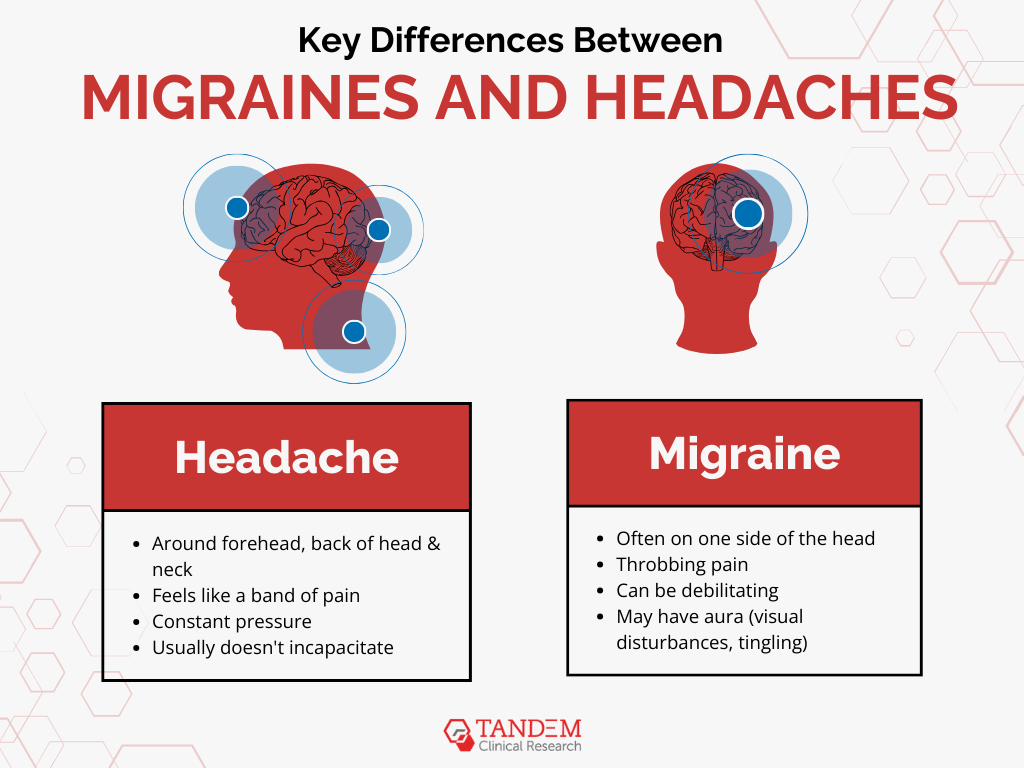
Key Differences Between Migraine and Headache
Although both conditions involve head pain, several important differences help distinguish them.
| Feature | Headache | Migraine |
|---|---|---|
| Pain intensity | Mild to moderate | Moderate to severe |
| Pain location | Entire head or both sides | Usually one side, but can affect both |
| Pain type | Dull, tight, or pressure-like | Throbbing or pulsating |
| Duration | 30 minutes to several hours | 4 to 72 hours if untreated |
| Physical activity | Usually does not worsen pain | Often makes pain worse |
| Additional symptoms | Rare | Nausea, vomiting, sensitivity to light, sound, or smells |
Symptoms of a Headache
Common headache symptoms include:
- Dull or aching pain
- Pressure around the forehead or back of the head
- Tightness in the scalp or neck
- Mild sensitivity to activity
- Pain that improves with rest
Tension headaches are the most common type and are often linked to stress, muscle tension, or fatigue.
Symptoms of a Migraine
Migraines often produce several symptoms beyond head pain, including:
- Severe throbbing or pulsating pain
- Pain on one side of the head, although both sides may be affected
- Nausea or vomiting
- Sensitivity to light
- Sensitivity to sound
- Sensitivity to certain smells
- Blurred vision
- Dizziness
- Difficulty concentrating
Some people also experience an aura, which may include flashing lights, blind spots, tingling sensations, or temporary speech difficulties before the headache begins.
Common Causes of Headaches
Headaches can be triggered by many everyday factors, including:
- Stress
- Dehydration
- Lack of sleep
- Eye strain
- Poor posture
- Hunger
- Sinus infections
- Excessive caffeine or caffeine withdrawal
Identifying and managing these triggers can help reduce headache frequency.
Common Migraine Triggers
Migraine triggers vary from person to person but commonly include:
- Hormonal changes
- Emotional stress
- Sleep disturbances
- Certain foods such as aged cheese or processed meats
- Alcohol
- Bright lights
- Strong odors
- Weather changes
- Skipping meals
Keeping a migraine diary may help identify personal triggers.
Treatment Options
Treatment depends on the type and severity of the condition.
For headaches, treatment may include:
- Rest
- Drinking plenty of water
- Over-the-counter pain relievers
- Stress management
- Correcting posture
- Limiting screen time
Migraine treatment may involve:
- Prescription migraine medications
- Preventive medications for frequent attacks
- Avoiding known triggers
- Adequate sleep
- Staying hydrated
- Regular exercise
- Relaxation techniques
A healthcare provider can recommend the most appropriate treatment plan based on your symptoms.
When to Seek Medical Attention
Seek immediate medical care if you experience:
- A sudden, severe headache unlike any previous headache
- Head pain following a head injury
- Fever, confusion, seizures, or stiff neck with a headache
- Vision loss or difficulty speaking
- Weakness or numbness
- Frequent migraines or headaches that worsen over time
Early evaluation can help identify serious underlying conditions and improve treatment outcomes.
Tips for Prevention
Whether you experience headaches or migraines, these healthy habits may help reduce attacks:
- Maintain a regular sleep schedule.
- Stay hydrated throughout the day.
- Eat balanced meals and avoid skipping meals.
- Exercise regularly.
- Manage stress through relaxation or mindfulness techniques.
- Limit alcohol and excessive caffeine.
- Identify and avoid personal triggers.
- Attend regular medical checkups if symptoms persist.
Conclusion
Although migraines and headaches both cause head pain, they are different conditions with distinct symptoms, causes, and treatment approaches. Headaches are often mild to moderate and result from factors such as stress or dehydration, while migraines are a neurological disorder that can cause severe pain along with nausea and sensitivity to light or sound. Recognizing the differences between the two can help you seek the right treatment, reduce future attacks, and improve your overall well-being. If your symptoms are frequent, severe, or interfere with daily life, consult a healthcare provider for a proper evaluation and personalized care plan.