Anemia is a common medical condition that occurs when the body does not have enough healthy red blood cells or sufficient hemoglobin to carry oxygen to its tissues. Hemoglobin is a protein found inside red blood cells that binds to oxygen in the lungs and delivers it throughout the body. When hemoglobin levels are too low, the body’s organs and muscles receive less oxygen, which can lead to fatigue, weakness, and other health problems.
Anemia can affect people of all ages, including children, adults, and older adults. It may develop gradually or appear suddenly, depending on the underlying cause. Fortunately, many types of anemia can be effectively treated once the cause is identified.
How Red Blood Cells Work
Red blood cells play an essential role in transporting oxygen from the lungs to every part of the body. They also carry carbon dioxide back to the lungs, where it is exhaled.
When the body produces too few red blood cells, destroys them too quickly, or loses them through bleeding, oxygen delivery decreases. This shortage of oxygen is responsible for many of the symptoms associated with anemia.
What Causes Anemia?
Anemia can develop for several different reasons. The most common causes include:
Iron Deficiency
Iron-deficiency anemia is the most common type. Iron is needed to produce hemoglobin, and a lack of iron can reduce the body’s ability to make healthy red blood cells.
Iron deficiency may result from:
- Poor dietary intake
- Blood loss from heavy menstrual periods
- Stomach ulcers or digestive tract bleeding
- Pregnancy
- Reduced iron absorption due to digestive disorders
Vitamin Deficiency
Low levels of vitamin B12 or folate can interfere with red blood cell production and lead to anemia.
Chronic Diseases
Long-term medical conditions such as kidney disease, cancer, inflammatory disorders, or chronic infections may reduce the body’s ability to produce enough red blood cells.
Blood Loss
Significant blood loss due to injury, surgery, gastrointestinal bleeding, or heavy menstrual bleeding can cause anemia.
Bone Marrow Disorders
Certain conditions affecting the bone marrow may interfere with red blood cell production.
Inherited Conditions
Some forms of anemia are inherited, meaning they are passed from parents to children through genes.
Common Symptoms of Anemia
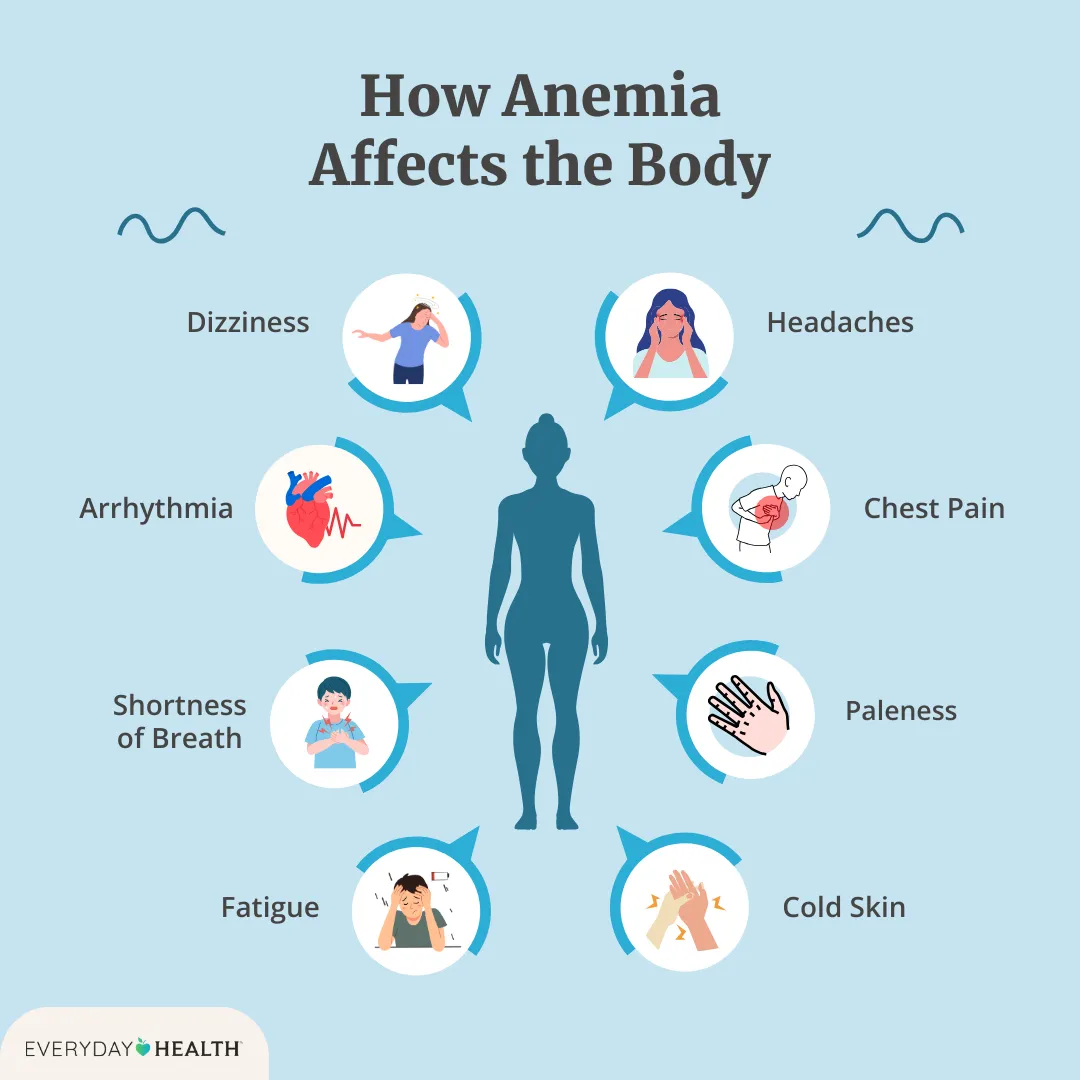
Symptoms vary depending on the severity and cause of anemia. Mild anemia may produce few or no symptoms, while more severe cases can significantly affect daily activities.
Common symptoms include:
- Fatigue
- Weakness
- Pale skin
- Shortness of breath
- Dizziness or lightheadedness
- Headaches
- Rapid or irregular heartbeat
- Cold hands and feet
- Difficulty concentrating
- Chest pain in severe cases
If symptoms develop suddenly or worsen over time, medical evaluation is important.
Who Is at Risk?
Several factors increase the likelihood of developing anemia, including:
- Poor nutrition
- Pregnancy
- Heavy menstrual bleeding
- Chronic diseases
- Digestive disorders that affect nutrient absorption
- Older age
- Family history of inherited blood disorders
- Frequent blood donation
Understanding these risk factors can help support early detection and prevention.
How Is Anemia Diagnosed?
Healthcare providers diagnose anemia through a combination of medical history, physical examination, and laboratory tests.
Common tests include:
- Complete blood count (CBC)
- Hemoglobin measurement
- Iron studies
- Vitamin B12 and folate levels
- Reticulocyte count
- Additional tests to identify the underlying cause if needed
Early diagnosis allows treatment to begin before complications develop.
Treatment Options
Treatment depends on the specific cause of anemia.
Possible treatments include:
- Iron supplements for iron-deficiency anemia
- Vitamin B12 or folic acid supplements
- Dietary improvements
- Medications to stimulate red blood cell production in certain conditions
- Treatment of underlying medical disorders
- Blood transfusions in severe cases
Treatment should always be guided by a qualified healthcare provider.
How to Help Prevent Anemia
Some forms of anemia can be prevented through healthy lifestyle habits.
Helpful strategies include:
- Eating iron-rich foods such as lean meat, beans, spinach, and fortified cereals
- Consuming foods rich in vitamin C to improve iron absorption
- Including vitamin B12 and folate in your diet through foods such as eggs, dairy products, leafy vegetables, and legumes
- Managing chronic health conditions
- Seeking medical advice for heavy menstrual bleeding or unexplained blood loss
- Attending regular health checkups
A balanced diet plays an important role in maintaining healthy red blood cell production.
Possible Complications
If left untreated, anemia can lead to:
- Severe fatigue
- Reduced physical performance
- Pregnancy complications
- Heart problems due to increased workload on the heart
- Delayed growth and development in children
- Reduced quality of life
Early treatment helps reduce the risk of these complications.
When to See a Healthcare Provider
Consult a healthcare provider if you experience:
- Persistent fatigue
- Shortness of breath
- Pale skin
- Frequent dizziness
- Rapid heartbeat
- Unexplained weakness
- Symptoms that interfere with daily activities
Medical evaluation is especially important if symptoms develop suddenly or worsen over time.
Conclusion
Anemia is a common condition that occurs when the body does not have enough healthy red blood cells or hemoglobin to deliver adequate oxygen to its tissues. While iron deficiency is the most common cause, anemia can also result from vitamin deficiencies, chronic diseases, blood loss, or inherited conditions. Recognizing the symptoms early and seeking appropriate medical care can help prevent complications. A nutritious diet, regular health screenings, and prompt treatment of underlying conditions are essential for maintaining healthy blood cell production and supporting overall well-being.