Asthma is a chronic respiratory condition that affects the airways in the lungs, making it difficult to breathe. It occurs when the airways become inflamed, swollen, and overly sensitive to certain triggers. During an asthma attack, the muscles around the airways tighten, the lining becomes inflamed, and excess mucus is produced, causing the air passages to narrow. This can lead to symptoms such as wheezing, coughing, chest tightness, and shortness of breath.
Asthma affects people of all ages and is one of the most common long-term lung conditions worldwide. Although there is no cure, proper treatment and lifestyle management can help most people control their symptoms and lead active, healthy lives.
How Asthma Affects the Lungs
The lungs contain a network of airways called bronchial tubes that carry oxygen in and carbon dioxide out. In people with asthma, these airways are more sensitive than normal.
When exposed to a trigger, three main changes occur:
- The airway lining becomes inflamed.
- The muscles surrounding the airways tighten.
- Excess mucus blocks the air passages.
These changes make breathing more difficult and reduce the amount of air that can move in and out of the lungs.
Common Symptoms of Asthma
Asthma symptoms vary from person to person and may range from mild to severe. Some people experience symptoms only occasionally, while others have them more frequently.
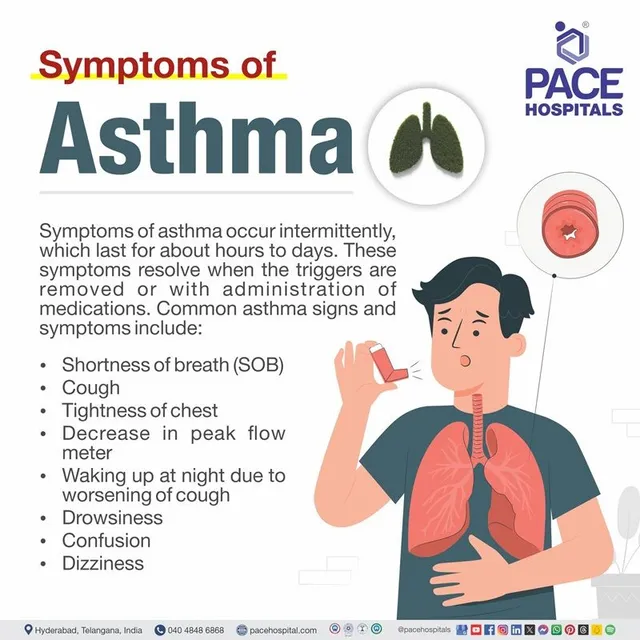
Common symptoms include:
- Shortness of breath
- Wheezing, especially while exhaling
- Persistent coughing, particularly at night or early in the morning
- Chest tightness or discomfort
- Difficulty breathing during exercise
- Frequent respiratory infections
- Trouble sleeping due to coughing or breathing problems
Symptoms often worsen during an asthma attack and may require immediate treatment.
What Causes Asthma?
The exact cause of asthma is not fully understood, but researchers believe it develops due to a combination of genetic and environmental factors.
People are more likely to develop asthma if they have:
- A family history of asthma or allergies
- Allergic conditions such as eczema or hay fever
- Frequent respiratory infections during childhood
- Exposure to tobacco smoke
- Air pollution
- Occupational exposure to chemicals or dust
Common Asthma Triggers
Asthma symptoms can be triggered by many different factors, including:
- Pollen
- Dust mites
- Pet dander
- Mold
- Cigarette smoke
- Air pollution
- Cold air
- Exercise
- Respiratory infections
- Strong odors or perfumes
- Emotional stress
- Certain medications
Identifying and avoiding personal triggers can help reduce asthma attacks.
Types of Asthma
Asthma can be classified into several types, depending on its cause or symptoms.
Allergic Asthma
Triggered by allergens such as pollen, dust mites, mold, or pet dander.
Non-Allergic Asthma
Caused by factors unrelated to allergies, such as infections, weather changes, stress, or strong odors.
Exercise-Induced Asthma
Symptoms occur during or shortly after physical activity.
Occupational Asthma
Develops due to exposure to dust, chemicals, fumes, or other substances in the workplace.
Childhood Asthma
Asthma often begins during childhood, although some children experience fewer symptoms as they grow older.
How Is Asthma Diagnosed?
Healthcare providers diagnose asthma by reviewing your medical history, discussing your symptoms, performing a physical examination, and evaluating your lung function.
Common diagnostic tests include:
- Spirometry to measure lung function
- Peak flow measurements
- Allergy testing
- Chest imaging when necessary
- Additional breathing tests if required
These tests help determine the severity of asthma and guide treatment decisions.
Treatment for Asthma
Although asthma cannot be cured, it can usually be managed effectively with medication and lifestyle changes.
Treatment may include:
- Quick-relief inhalers to relieve sudden symptoms
- Long-term controller medications to reduce airway inflammation
- Allergy medications when allergies contribute to symptoms
- Regular monitoring of lung function
- Following an individualized asthma action plan
Medications should always be taken as directed by a healthcare provider.
Tips for Managing Asthma
You can reduce asthma symptoms and improve your quality of life by:
- Taking prescribed medications consistently
- Avoiding known asthma triggers
- Keeping your home free of dust and allergens
- Avoiding smoking and secondhand smoke
- Exercising regularly with medical guidance
- Receiving recommended vaccinations to reduce respiratory infections
- Monitoring your symptoms and seeking medical advice if they worsen
Regular follow-up appointments help ensure your asthma remains well controlled.
When to Seek Emergency Care
Immediate medical attention is necessary if you experience:
- Severe shortness of breath
- Difficulty speaking due to breathlessness
- Blue lips or fingernails
- Rapid worsening of symptoms
- Little or no improvement after using a rescue inhaler
These may be signs of a severe asthma attack requiring urgent treatment.
Conclusion
Asthma is a long-term condition that affects the airways and can make breathing difficult, but it is manageable with the right care. Understanding its symptoms, causes, and triggers allows individuals to take proactive steps to reduce attacks and maintain healthy lung function. Regular medical care, proper medication use, and healthy lifestyle habits can help people with asthma live active, fulfilling lives while minimizing the impact of the condition on their daily activities.