Cholesterol is a waxy, fat-like substance found in every cell of the body. It plays a vital role in maintaining good health by helping produce hormones, vitamin D, and substances that aid digestion. Although cholesterol is essential for normal body functions, having too much cholesterol in the blood can increase the risk of heart disease and stroke.
Many people associate cholesterol with poor health, but the truth is that the body needs a certain amount to function properly. Problems arise when cholesterol levels become too high, especially if unhealthy lifestyle habits contribute to its buildup in the arteries.
What Does Cholesterol Do?
Cholesterol is produced naturally by the liver, which makes all the cholesterol your body needs. It is also found in certain foods, particularly those from animal sources such as meat, eggs, dairy products, and butter.
Cholesterol helps the body by:
- Building healthy cell membranes
- Producing hormones such as estrogen, testosterone, and cortisol
- Making vitamin D
- Supporting the production of bile acids, which help digest fats
Without cholesterol, many important bodily processes would not function properly.
Types of Cholesterol
Cholesterol travels through the bloodstream attached to proteins called lipoproteins. There are two main types of cholesterol, along with another important blood fat called triglycerides.
Low-Density Lipoprotein (LDL)
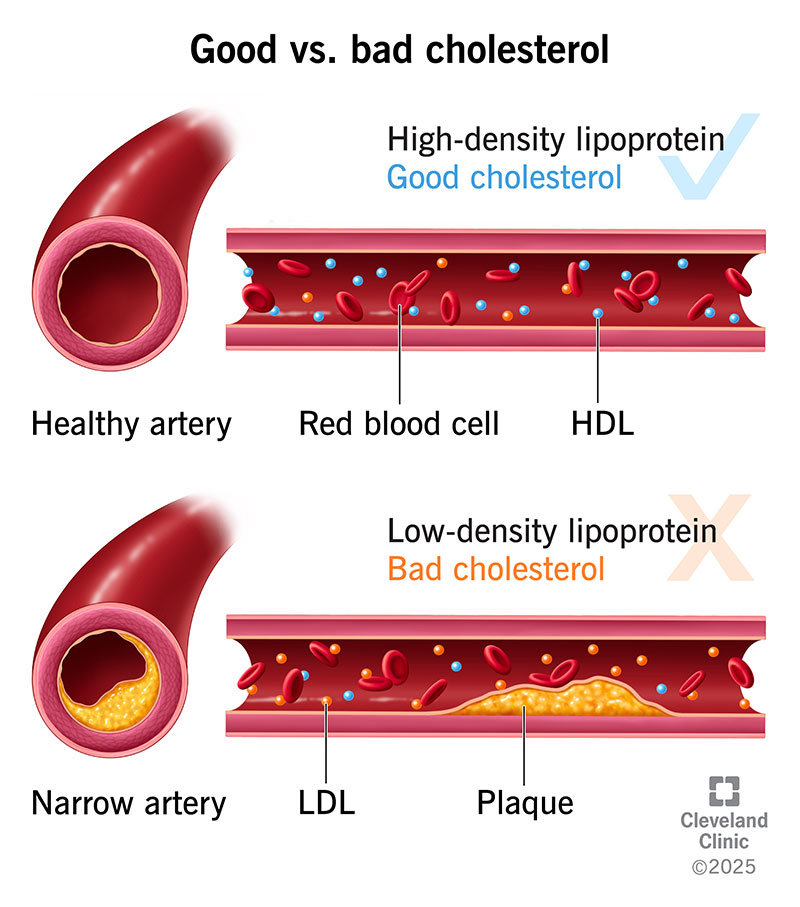
Low-density lipoprotein (LDL) is often called “bad cholesterol.” When LDL levels become too high, cholesterol can build up inside the walls of arteries, forming plaque. Over time, plaque narrows the arteries and reduces blood flow, increasing the risk of heart attack and stroke.
High-Density Lipoprotein (HDL)
High-density lipoprotein (HDL) is known as “good cholesterol.” HDL helps remove excess cholesterol from the bloodstream and carries it back to the liver, where it is broken down and removed from the body. Higher HDL levels are generally associated with better heart health.
Triglycerides
Triglycerides are another type of fat found in the blood. While they are not cholesterol, high triglyceride levels combined with high LDL or low HDL can further increase the risk of cardiovascular disease.
What Causes High Cholesterol?
Several factors can contribute to elevated cholesterol levels, including:
- Eating foods high in saturated and trans fats
- Being overweight or obese
- Lack of regular physical activity
- Smoking
- Excessive alcohol consumption
- Diabetes
- Kidney disease
- Family history of high cholesterol
- Increasing age
In some people, high cholesterol is inherited through a genetic condition known as familial hypercholesterolemia.
Symptoms of High Cholesterol
High cholesterol usually does not cause noticeable symptoms. Most people discover they have high cholesterol only after a routine blood test.
Because it develops silently, regular cholesterol screenings are important, especially for adults with risk factors such as high blood pressure, diabetes, obesity, or a family history of heart disease.
Why High Cholesterol Is Dangerous
Excess cholesterol can accumulate in the arteries, forming fatty deposits called plaques. As plaque builds up, the arteries become narrower and less flexible, limiting blood flow to vital organs.
Untreated high cholesterol increases the risk of:
- Coronary artery disease
- Heart attack
- Stroke
- Peripheral artery disease
- High blood pressure
Managing cholesterol levels is one of the most effective ways to protect long-term heart health.
How Is Cholesterol Measured?
A healthcare provider can measure cholesterol levels with a blood test called a lipid profile or lipid panel. This test typically measures:
- Total cholesterol
- LDL (bad cholesterol)
- HDL (good cholesterol)
- Triglycerides
Your healthcare provider will interpret these results based on your age, overall health, and risk factors for heart disease.
How to Maintain Healthy Cholesterol Levels
Healthy lifestyle choices can help improve cholesterol levels and reduce the risk of cardiovascular disease.
Consider these habits:
- Eat more fruits, vegetables, whole grains, legumes, and lean proteins.
- Limit foods high in saturated and trans fats.
- Choose healthy fats such as those found in nuts, seeds, avocados, and olive oil.
- Exercise for at least 150 minutes each week.
- Maintain a healthy weight.
- Avoid smoking and tobacco products.
- Limit alcohol intake.
- Manage conditions such as diabetes and high blood pressure.
If lifestyle changes are not enough, a healthcare provider may recommend cholesterol-lowering medications.
When to See a Healthcare Provider
Adults should have their cholesterol checked regularly, even if they feel healthy. Earlier or more frequent testing may be recommended for people with diabetes, high blood pressure, obesity, or a strong family history of cardiovascular disease.
Conclusion
Cholesterol is an essential substance that supports many important functions in the body, but excessive levels can increase the risk of serious cardiovascular diseases. Because high cholesterol often develops without symptoms, regular screening is crucial for early detection. By maintaining a balanced diet, staying physically active, avoiding smoking, and following medical advice, you can keep your cholesterol within a healthy range and support lifelong heart health.